
Are your players showing up to the rink properly fuelled? Are they drinking enough during practice? Are they recovering well enough to do it all again tomorrow?
As a coach, you might find yourself thinking about your players’ nutrition throughout the season — and occasionally talking to them about it, too.
But the messages athletes hear about food matter. Comments about what players “should” or “shouldn’t” eat, labelling foods as “junk,” or bringing personal food rules and diet culture into the dressing room can influence how young athletes think about fuelling their bodies.
You also have an opportunity to create an environment that makes good nutrition habits easier. The schedules you set, the opportunities you provide to eat and drink, and the language you use around food can all support your players’ ability to fuel and perform.
Here are five practical ways to support better nutrition this season.
1. Give players opportunities to eat
Think about what happens before your players even step on the ice. They may be coming straight from school, travelling to the rink, or completing an off-ice warm-up.
If several hours have passed since they last ate, they may start practice or a game already under-fuelled.
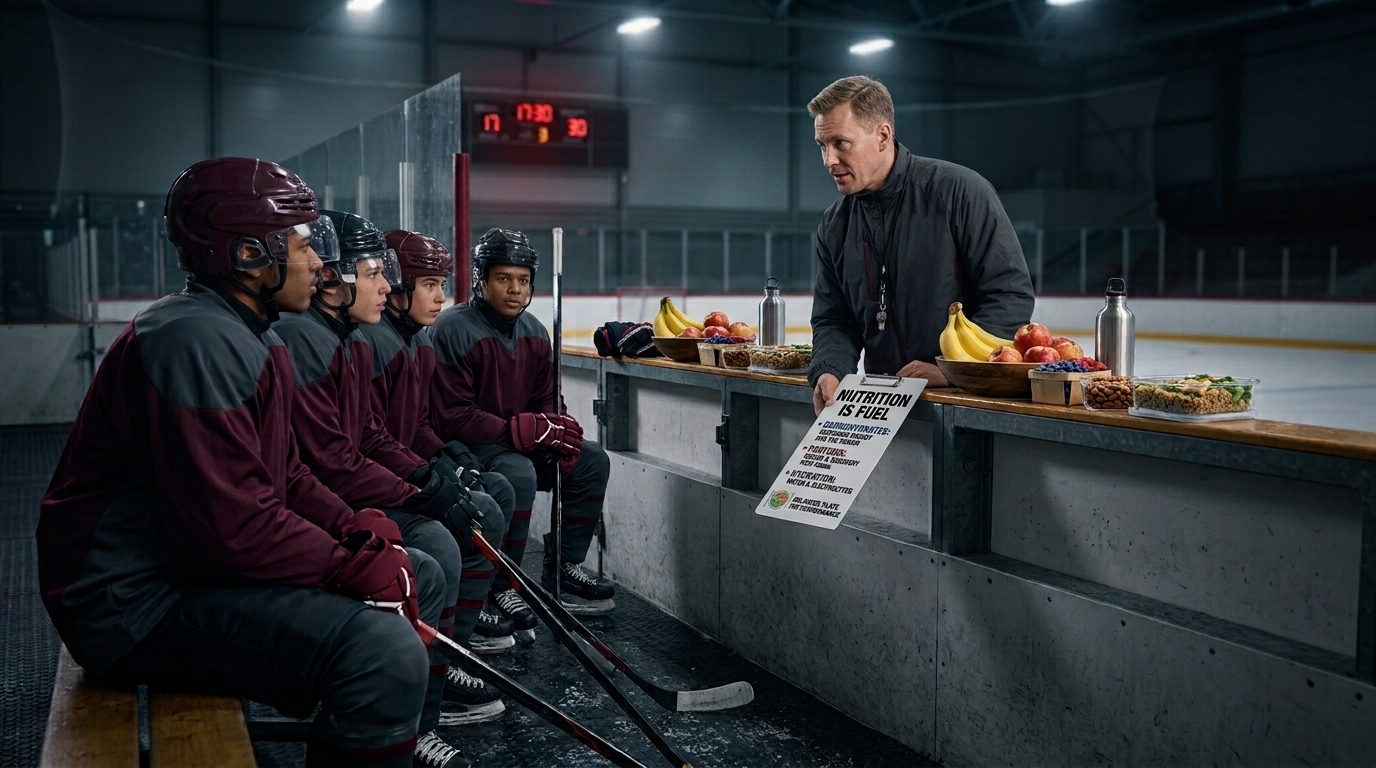
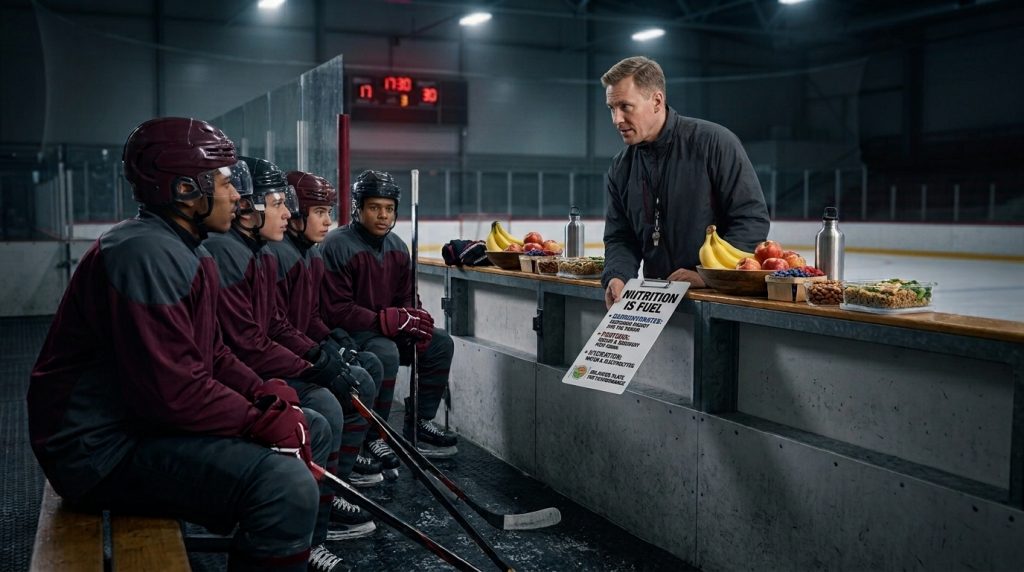
Encourage players to bring a pre-hockey snack with them, or consider setting up a team snack table before games and practices so players have easy access to fuel when they need it.
2. Make hydration part of the routine
Encourage athletes to arrive with a filled water bottle and give them regular opportunities to drink during practices, off-ice training and games.
Water will cover their hydration needs for activities lasting 60 minutes. Sports drinks might be useful during longer or more intense sessions (and tournaments) because they provide
fluids, carbohydrates, and electrolytes.
3. Communicate schedules early
Tournament and travel nutrition requires planning.
When families know game times, meeting times, travel schedules, and team meals in advance, they can figure out when their athlete needs to eat, what food they need to pack,
and where meals might fit into the day.
The earlier you can communicate those details, the easier it is for families to make a realistic nutrition plan.
4. Encourage recovery — even after late games
A 9 or 10 p.m. finish doesn’t mean recovery nutrition stops being important.
Players still need carbohydrates to replenish the energy they used on the ice, protein to support muscle repair, and fluids to rehydrate. Simply reinforcing the importance of eating something after hockey can help normalize recovery as part of their routine.
5. Be mindful of how you talk about food
This might be one of the most important things you can do.
Calling foods “junk,” telling players certain foods are “bad,” or telling them to avoid sugar or sports drinks may seem like helpful nutrition advice. But young hockey players have high energy needs, and creating unnecessary fear around food can contribute to athletes not
eating enough.
Instead, focus on what food does for athletes. Carbohydrates — yes, even sugar — provide energy. Protein supports growth and recovery. Fluids and electrolytes support hydration.
If you want your team to learn more about how to fuel for hockey, bring in someone with appropriate education and training in sports nutrition. Nutrition can be a proactive part of player development, just like strength training, skills development, and other areas of performance.
Your players don’t need perfection. They need an environment that gives them opportunities to eat and drink, encourages them to fuel their bodies and helps them build nutrition habits
they can carry with them throughout their hockey careers.